

The words used, refurbished, and open-box appear on thousands of electronics listings. They sound like fixed grades, but they do not tell the whole story. Two products with the same label can have different cosmetic wear, batteries, accessories, testing, and return rights. Rather than assuming one condition name is always best, learn what each term usually suggests and what proof to ask for.
1. What does “used” mean?
A used electronic device has been previously owned or used. That does not automatically make it poor quality. A well-cared-for business laptop may perform reliably for years, while a newer machine could have hidden damage. Cosmetic condition is also separate from functional condition: a scuffed lid may be harmless, but an intermittent USB port affects everyday use.
Read the actual listing for battery performance, screen defects, storage size, charging behavior, and anything the seller could not test. Distinguish normal cosmetic wear from cracks, liquid damage, missing screws, or signs of repair. The most useful evidence is a clear description of the individual item being sold.
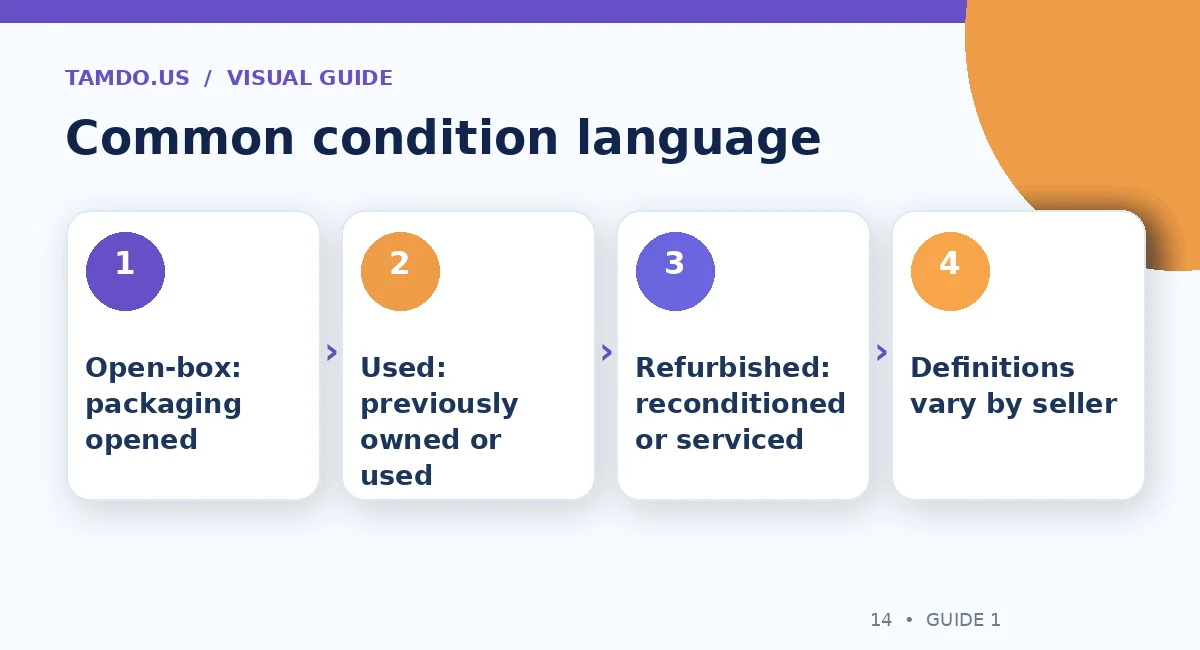
Common condition language — original educational illustration created for TamDo.us.
2. What is a refurbished device?
“Refurbished” commonly indicates that an item has been inspected, repaired, cleaned, or restored for resale. But there is no universal consumer-facing meaning that guarantees every refurbished device has a new battery, factory-original parts, or a particular cosmetic grade. A manufacturer-certified refurbished program may follow different standards from a third-party seller's process.
Ask who performed the work, what was replaced, and what tests were run. A refurbished listing should identify limitations clearly. Do not assume it comes with the same warranty as a brand-new unit; check the exact policy and who honors it.
3. Open-box does not automatically mean unused
An open-box item may have been displayed, returned, inspected, or simply removed from its packaging. Some have barely been handled; others may show signs of use. The original packaging can be damaged or missing, and factory accessories are not always included. “Open box” is not proof that a device was never powered on or that its battery has zero cycles.
Look for close-up photos, actual included contents, testing notes, and a clear statement of the condition. For a laptop, verify the charger model and wattage. For headphones, consider hygiene and ear-tip condition. For a camera, check the lens, ports, and shutter operation. Different products have different weak points.
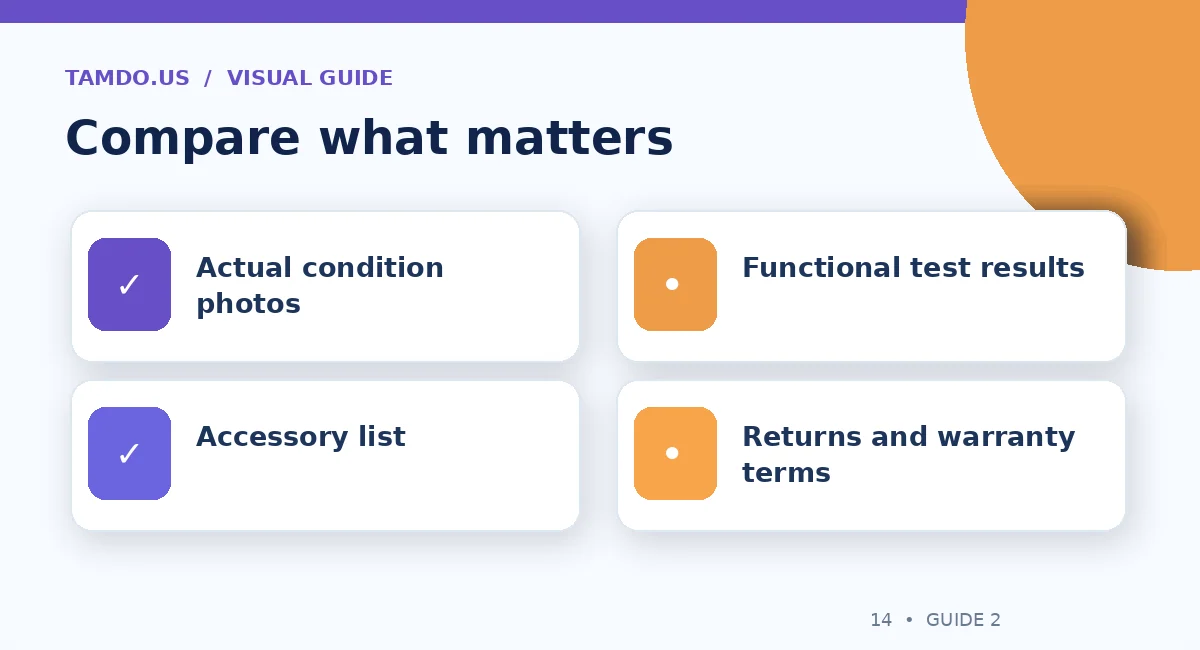
Compare what matters — original educational illustration created for TamDo.us.
4. Why actual photos matter more than a stock image
A stock photograph can tell you what a model looks like, but it cannot show the scratches, discoloration, dents, or serial-specific accessories on the unit you will receive. The U.S. Federal Trade Commission recommends inspecting marketplace photos and descriptions carefully and reviewing the seller's return and payment terms before purchase.
For an expensive used purchase, look for views of the screen powered on, ports, corners, keyboard, and back panel. Ask whether a shown charger or case is part of the sale. A phrase such as “everything shown is included” should be supported by accurate photos; if something is unclear, request written clarification.
5. Battery, activation, and compatibility are separate checks
For phones and smartwatches, confirm network compatibility and that the prior owner's account locks are removed. For laptops, inspect battery wear, firmware or organization enrollment restrictions, and operating system support. For cameras, verify lens mount compatibility. These issues are more consequential than small scratches and can make an otherwise attractive item unsuitable.
A realistic buying decision assigns more weight to functional reliability than cosmetics. A slightly worn laptop with a healthy battery and correctly sized charger may be better value than a pristine-looking one with an unexplained shutdown problem.
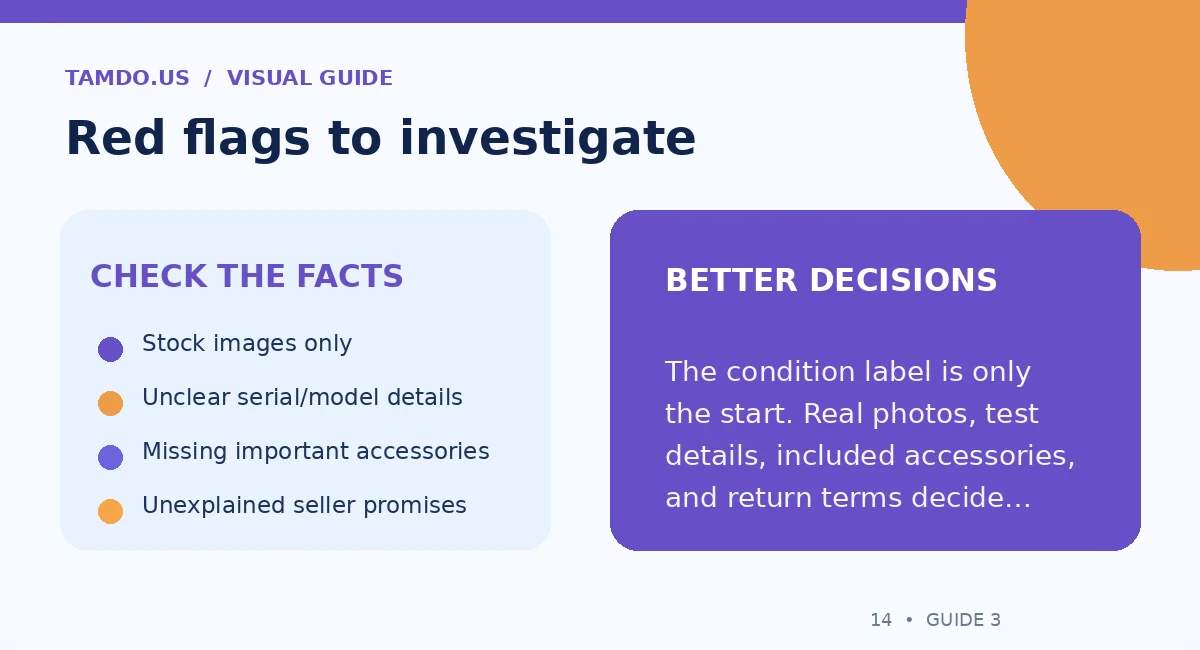
Red flags to investigate — original educational illustration created for TamDo.us.
6. Calculate the true price, not just the sticker
Add the selling price, shipping, taxes, missing accessories, and any known repair costs. Then compare with a new alternative. A cheap monitor that needs a special stand or power adapter may not be cheaper after all. A lightly used premium machine can be an excellent buy if the condition and return terms are transparent.
Also consider the risk of downtime. If the device is for school or business, the ability to return a defective item and obtain support can matter as much as a small price difference. Read the actual published policy rather than assuming every marketplace uses the same terms.
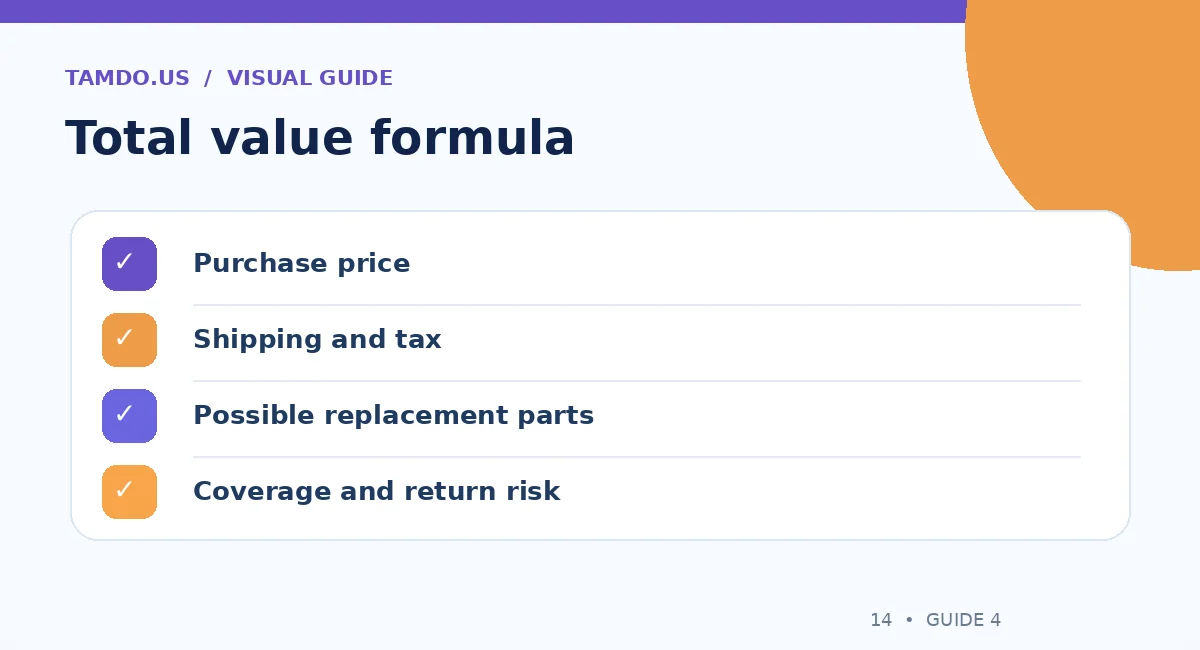
Total value formula — original educational illustration created for TamDo.us.
7. How TamDo.us listings can help you compare
TamDo.us displays products with condition information and individual inventory listings across categories including laptops and phones. Review the specific photos and descriptions, and ask about details that affect your intended use. Inventory changes, so do not rely on general buying guides to describe a specific device's exact condition.
A helpful buyer question is: “What has been tested, what is included, and what is the return policy for this particular unit?” An accurate answer is more useful than an impressive-sounding condition label.
Final takeaway
Used, refurbished, and open-box can all be smart choices. Choose the listing that offers the strongest combination of documented condition, tested function, total cost, and clear terms—not the label that sounds newest.
Frequently Asked Questions
Is refurbished always better than used?
No. The refurbishing process and the actual device condition matter more than the word alone.
Does open-box mean brand new?
Not necessarily. Packaging may be opened and the device may have been handled, tested, or returned.
What should I ask before ordering?
Ask for actual photos, test results, included accessories, total cost, and the exact return terms.