
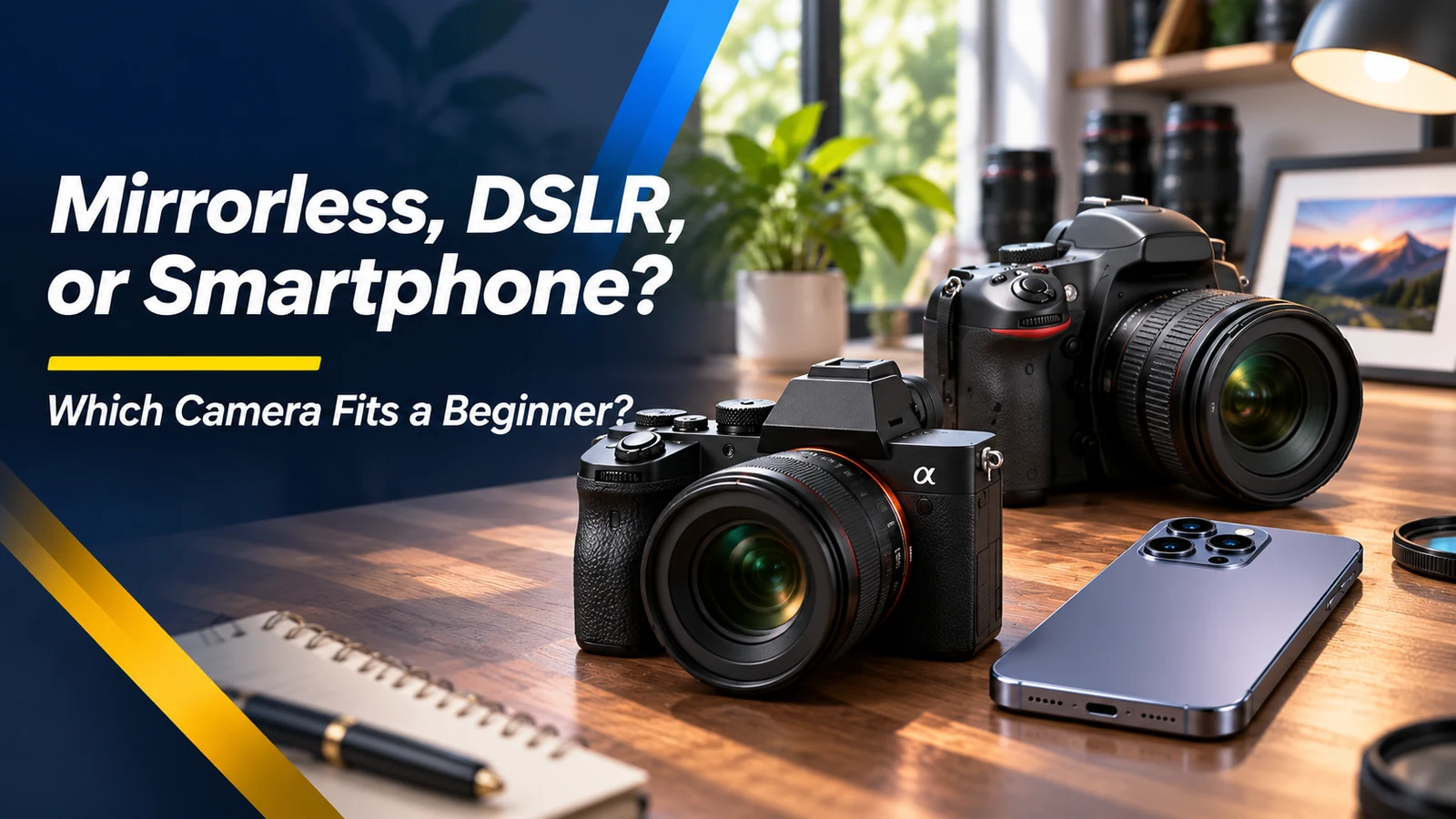
Before buying a dedicated camera, ask what your current phone cannot do. Modern smartphones are convenient for everyday images and social posts. Dedicated cameras become interesting when you want lens flexibility, stronger manual control, comfortable handling or a particular style of video. DSLRs and mirrorless cameras are both capable; the best choice depends on budget, the lenses you can afford and how much gear you want to carry. This is a practical beginner's guide rather than a contest over megapixels.
Why a smartphone can still be the best first camera
A phone is always nearby and often combines several computational images to produce a bright, sharp picture automatically. It is ideal for family memories, short videos, quick product photos and sharing. Its limitations show up when you need distant subjects, a natural shallow-depth-of-field look, extensive manual control or sustained recording. Before replacing the phone, improve lighting, framing and editing basics. Those skills carry over to any dedicated camera and often deliver more visible progress than a modest hardware upgrade.
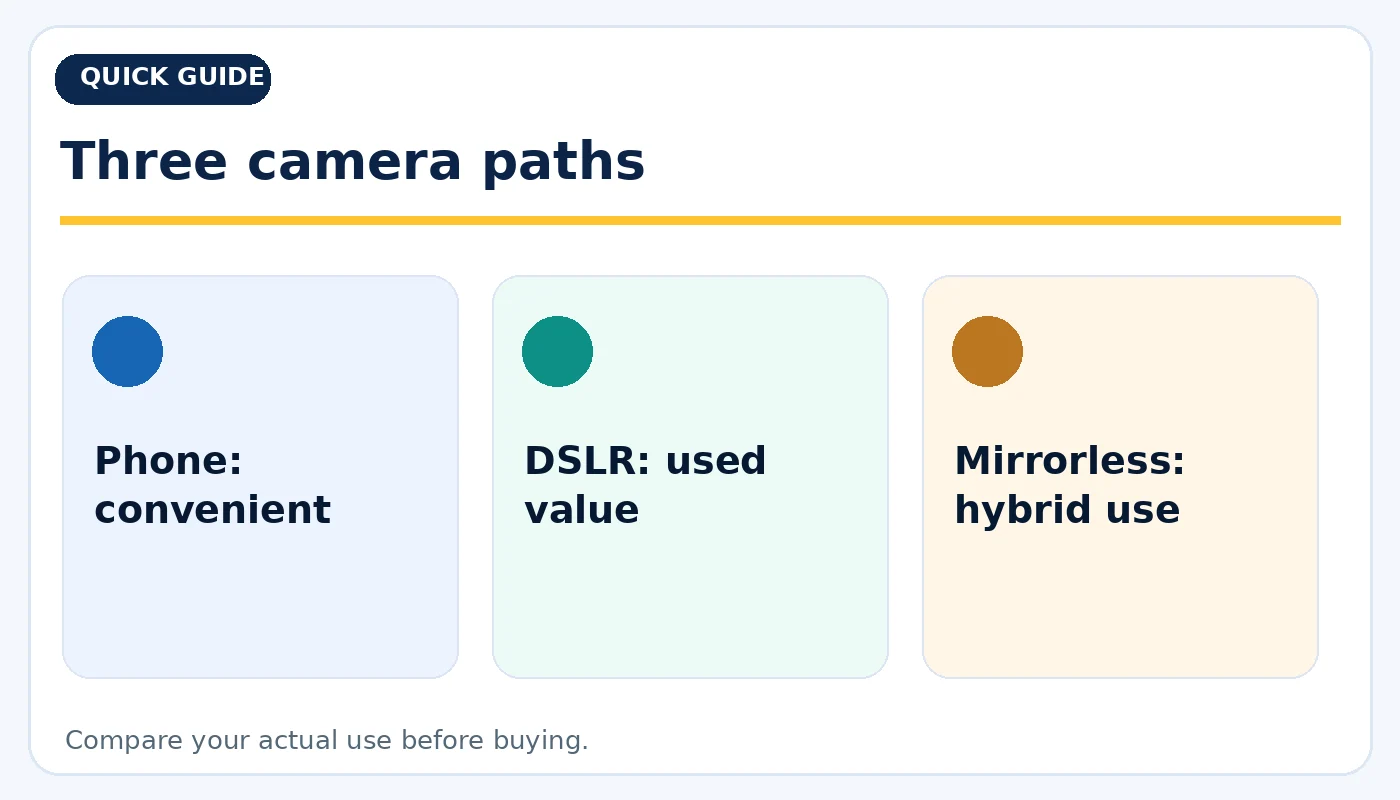
Three camera paths: practical considerations before buying.
What separates a DSLR from a mirrorless camera
A DSLR uses a mirror and optical viewing path; a mirrorless camera typically uses an electronic display or viewfinder. Mirrorless systems often offer compact bodies, detailed live previews and strong video features, while many used DSLRs provide access to affordable lenses and familiar physical controls. Neither category guarantees a particular autofocus capability, image quality or battery life. Compare actual models instead of relying on broad stereotypes, then see which controls and viewfinder feel natural.
Lenses shape your pictures more than megapixel claims
A flexible kit zoom is a sensible way to learn framing. A fast prime lens can help in low light and create a different background look. Telephoto lenses bring distant sports or wildlife closer, but add cost and weight. Before buying any lens, verify the exact lens mount and whether an adapter changes functionality. A bargain used body with no affordable compatible lenses can become expensive. Build a small system you will use, not a collection of impressive specifications.
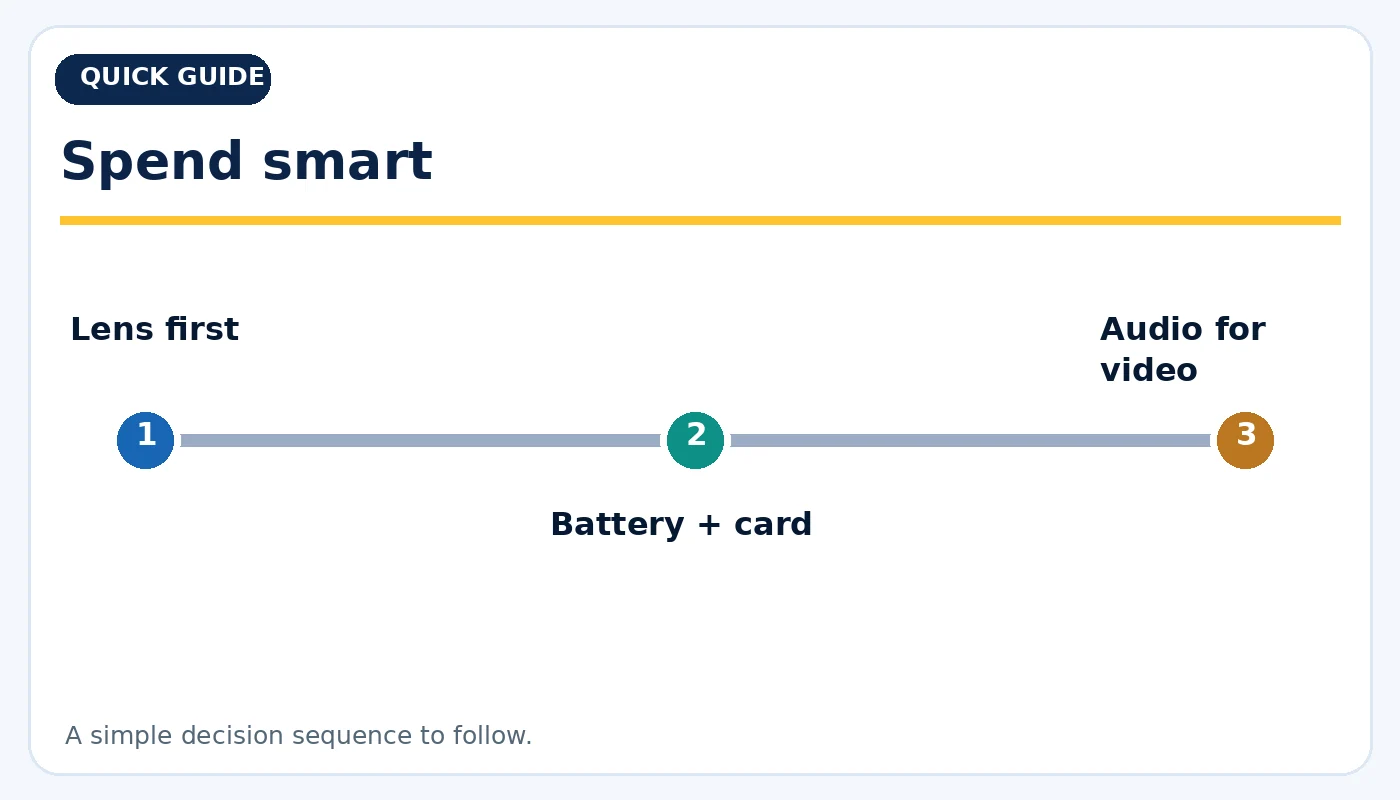
Spend smart: practical considerations before buying.
Autofocus, video and stabilization
For children, pets and events, autofocus tracking and burst performance may matter more than extreme resolution. For video, check recording limits, microphone inputs, stabilization, overheating behavior and whether the screen helps you frame yourself. Many cameras advertise 4K but offer different crops, frame rates and recording formats. If you plan to vlog, test your intended lens at arm's length. A compact camera with reliable autofocus can be more useful than a heavier professional body you rarely take outside.
True cost: body, lens, battery and storage
The camera body is only one part of your purchase. Add a compatible lens, memory card, battery, charger, carrying solution and possibly a tripod or microphone. Secondhand camera prices can be attractive, but proprietary accessories may cost more than expected. Decide whether you will edit RAW photos, save large videos or mainly shoot JPEGs. Storage and backup habits become important when you start bringing home hundreds of files from a trip or event.
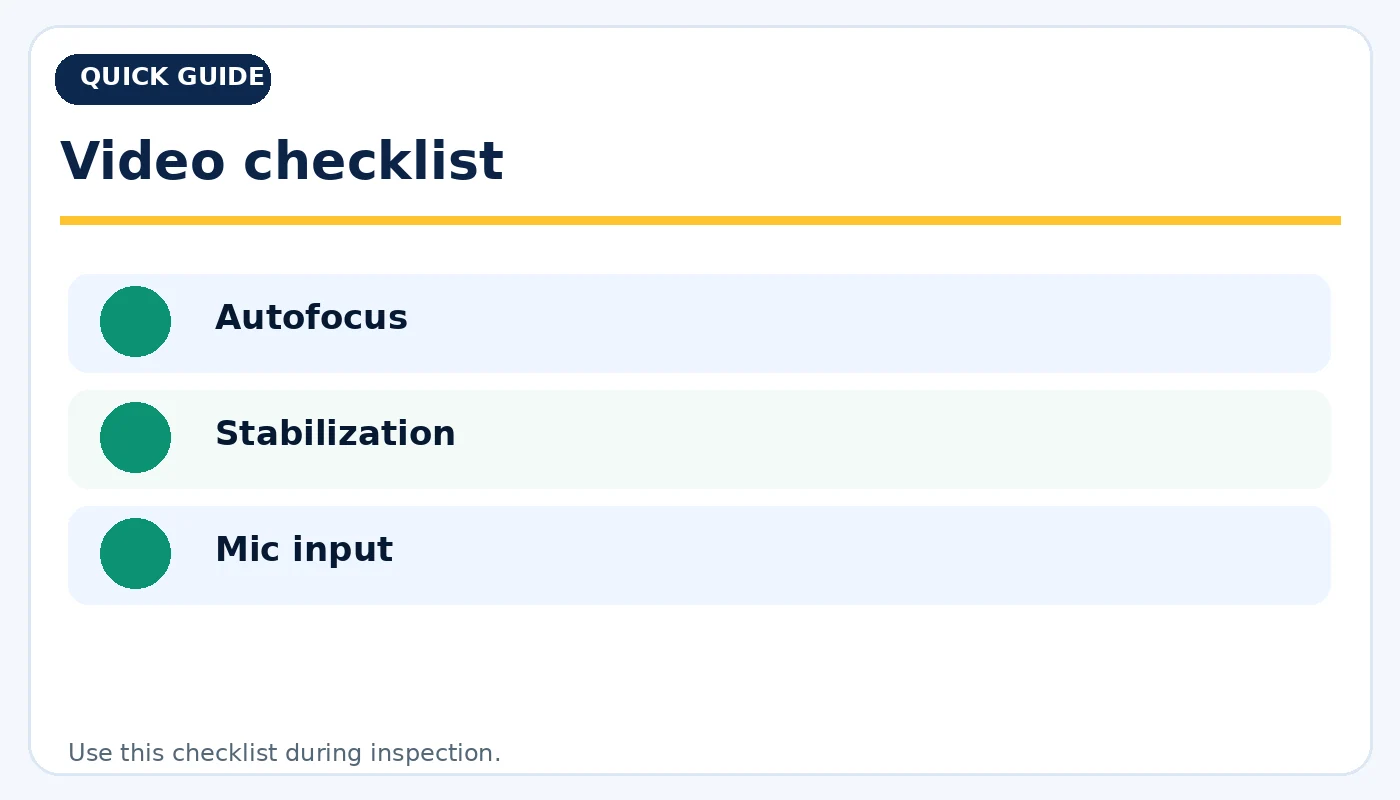
Video checklist: practical considerations before buying.
How to evaluate a used camera body
Confirm the exact model and lens mount. Inspect the sensor area without touching it, check all dials and buttons, try the viewfinder and screen, and test focus in good and dim lighting. Record a short video, play it back with sound and verify media-card writing. Check the battery compartment, ports, hot shoe and any signs of moisture or physical impact. Seller-reported shutter counts may be useful for some models but should never replace functional testing.
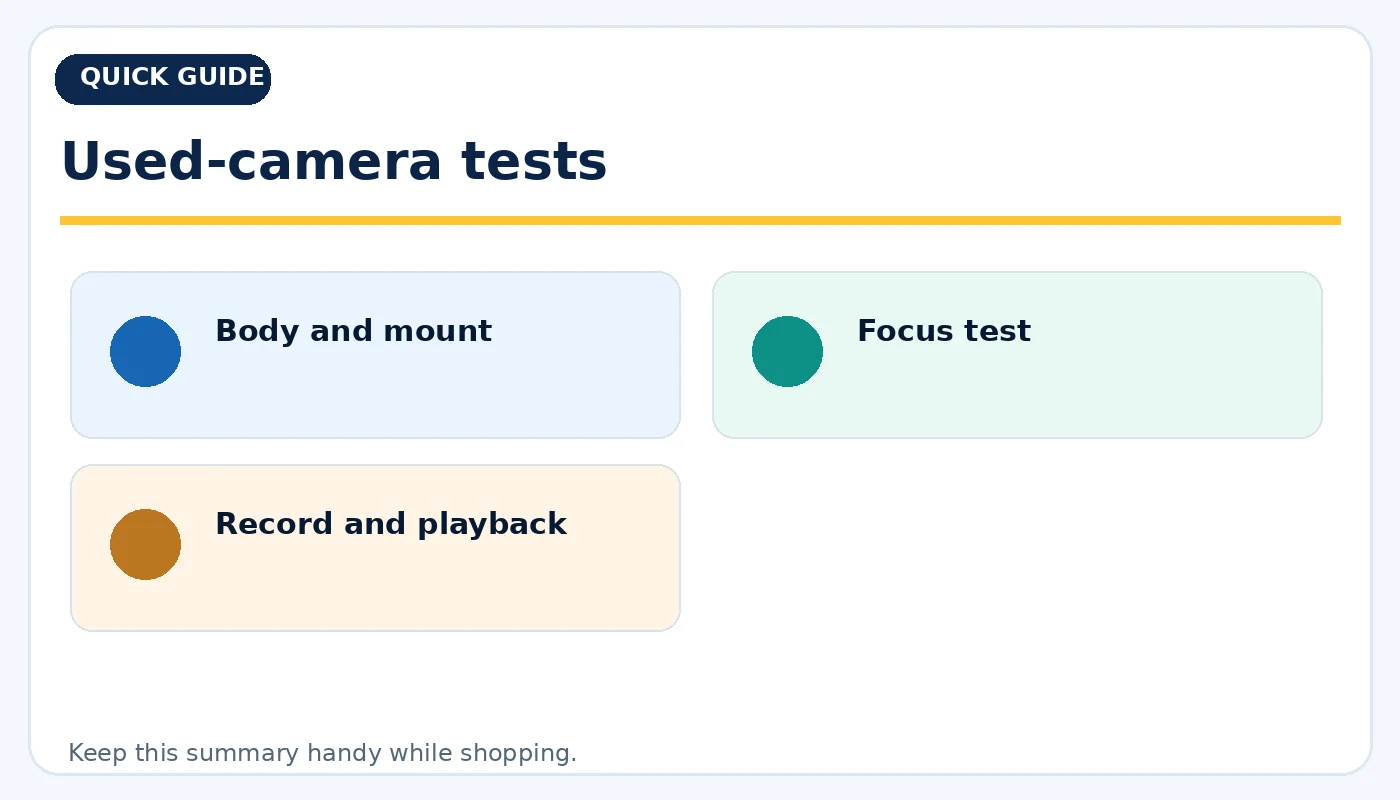
Used-camera tests: practical considerations before buying.
A simple buying recommendation
Stay with your smartphone when convenience and fast sharing are the priorities. Consider a used DSLR when budget and compatible lenses lead you toward a good overall kit. Consider mirrorless when you want a flexible modern photo/video platform with a body that feels comfortable. Compare whole-system costs. If a used camera listing includes a well-matched lens and charger, it may be a better value than a cheaper body alone.
Quick buying checklist
- Phone: convenient
- DSLR: used value
- Mirrorless: hybrid use
- Lens first
- Battery + card
- Audio for video
- Autofocus
- Stabilization
- Mic input
- Body and mount
- Focus test
- Record and playback
Frequently asked questions
Is a mirrorless camera always better than a DSLR?
No. Model-specific autofocus, handling, lens choice, cost and your intended use are more important.
Do beginners need a full-frame camera?
Usually not. Many smaller-sensor cameras produce excellent results and can offer more affordable lenses.
What is the first lens to buy?
A compatible kit zoom is a flexible starting point; add specialty lenses once you know what you enjoy shooting.
Explore related tech at TamDo.us
Ready to compare real listings? Shop digital cameras or browse more News & Guides. Listings change frequently; check each item’s condition, included accessories and availability before ordering.