
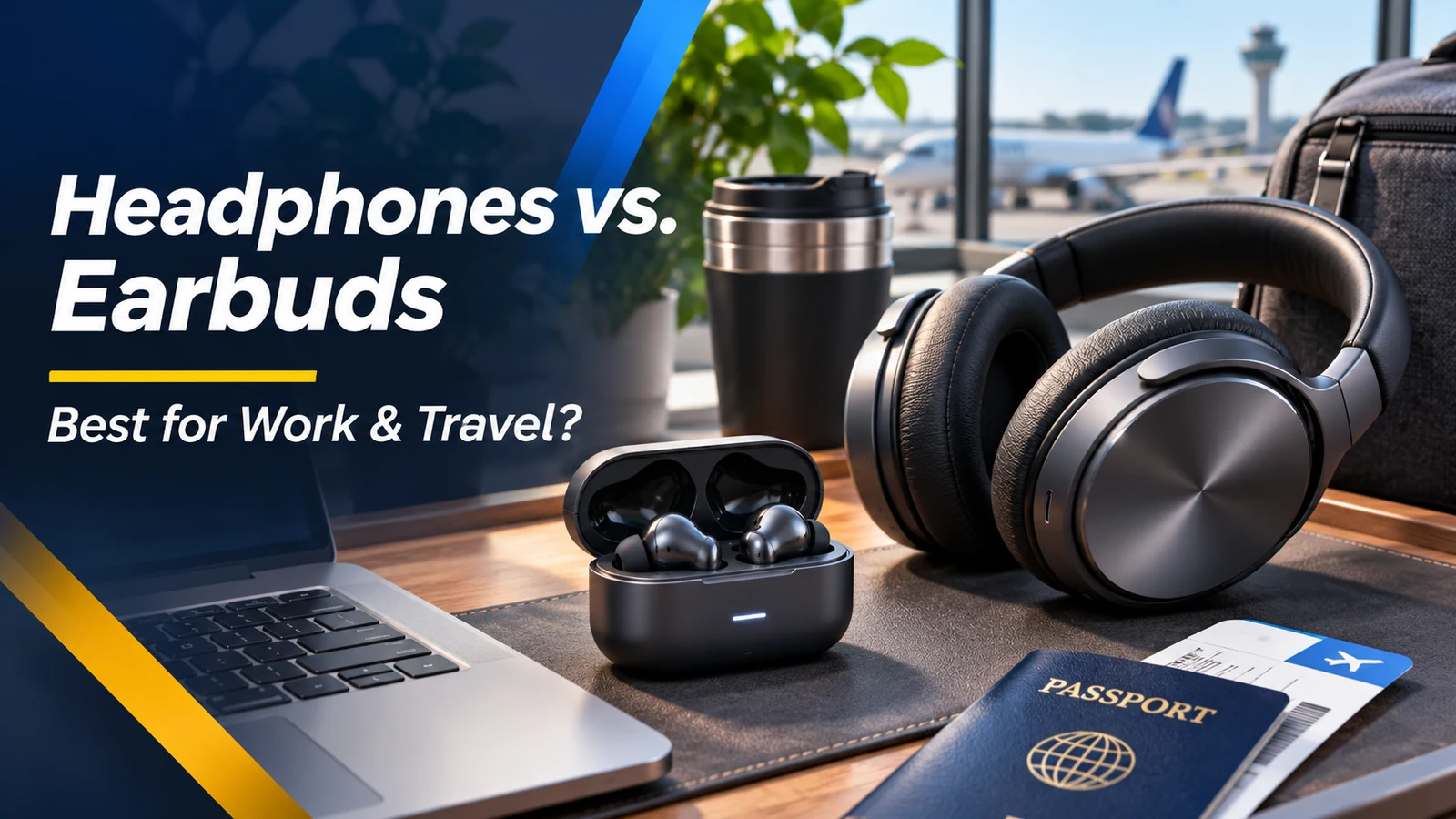
Two popular audio choices can look similar on a product page yet feel completely different after an hour of use. Over-ear headphones cover your ears; true wireless earbuds sit inside or near the ear canal. Both may offer active noise cancellation (ANC), microphones and Bluetooth multipoint, but the quality of those features varies by model. This guide focuses on work calls, long flights, commuting and everyday listening—where comfort and reliability often matter more than a big brand logo.
What ANC actually does
Active noise cancellation uses microphones and processing to reduce selected external noise, usually doing best with steady low-frequency sounds such as engine hum. It does not create complete silence, and voices or sudden high-frequency sounds may remain audible. A good physical seal also changes the result dramatically. Compare ANC in the setting you care about and check whether a transparency or ambient mode lets you hear important announcements. ANC is not rated hearing protection, and you should keep listening volume reasonable.
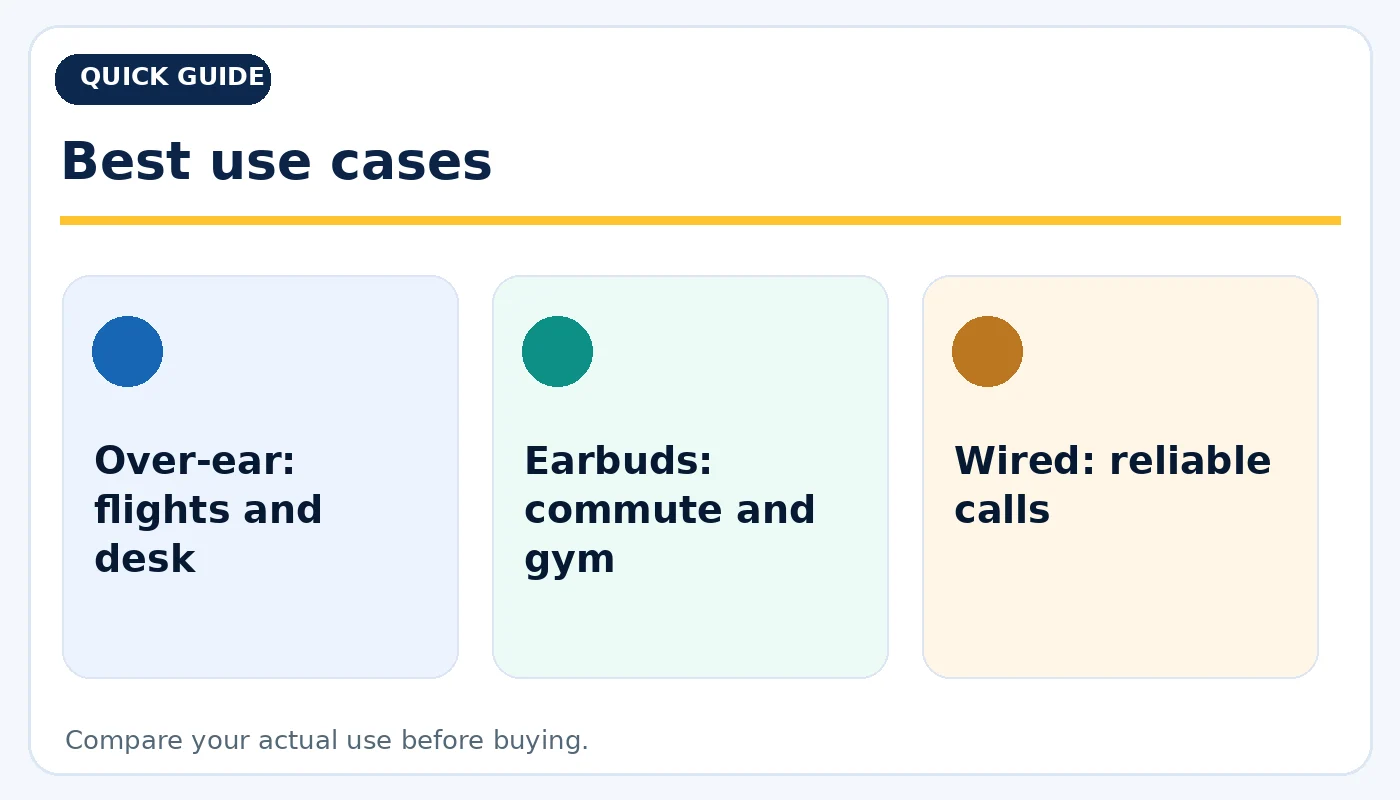
Best use cases: practical considerations before buying.
Over-ear comfort versus pocketable convenience
Over-ear headphones spread pressure around the head and can be pleasant for long sessions, but clamping force, weight and heat are personal. Earbuds are smaller and easier to pack, yet some listeners experience ear-canal fatigue or never achieve a secure seal. People who wear glasses should test over-ear pad pressure carefully. A well-fitting inexpensive earbud can sound and isolate better than a premium model that keeps slipping out. Whenever possible, wear each option long enough to notice comfort.
Call quality depends on the microphones and room
Bluetooth audio quality and voice pickup are not the same thing. A headset can sound terrific for music but make your voice thin or distant during a call. Try recording a voice memo in a quiet room and in a noisy workspace. Check whether the microphone changes when switching between a laptop and phone. If you attend frequent meetings, stable device pairing and microphone reliability can justify paying more than higher bass or flashy audio effects.
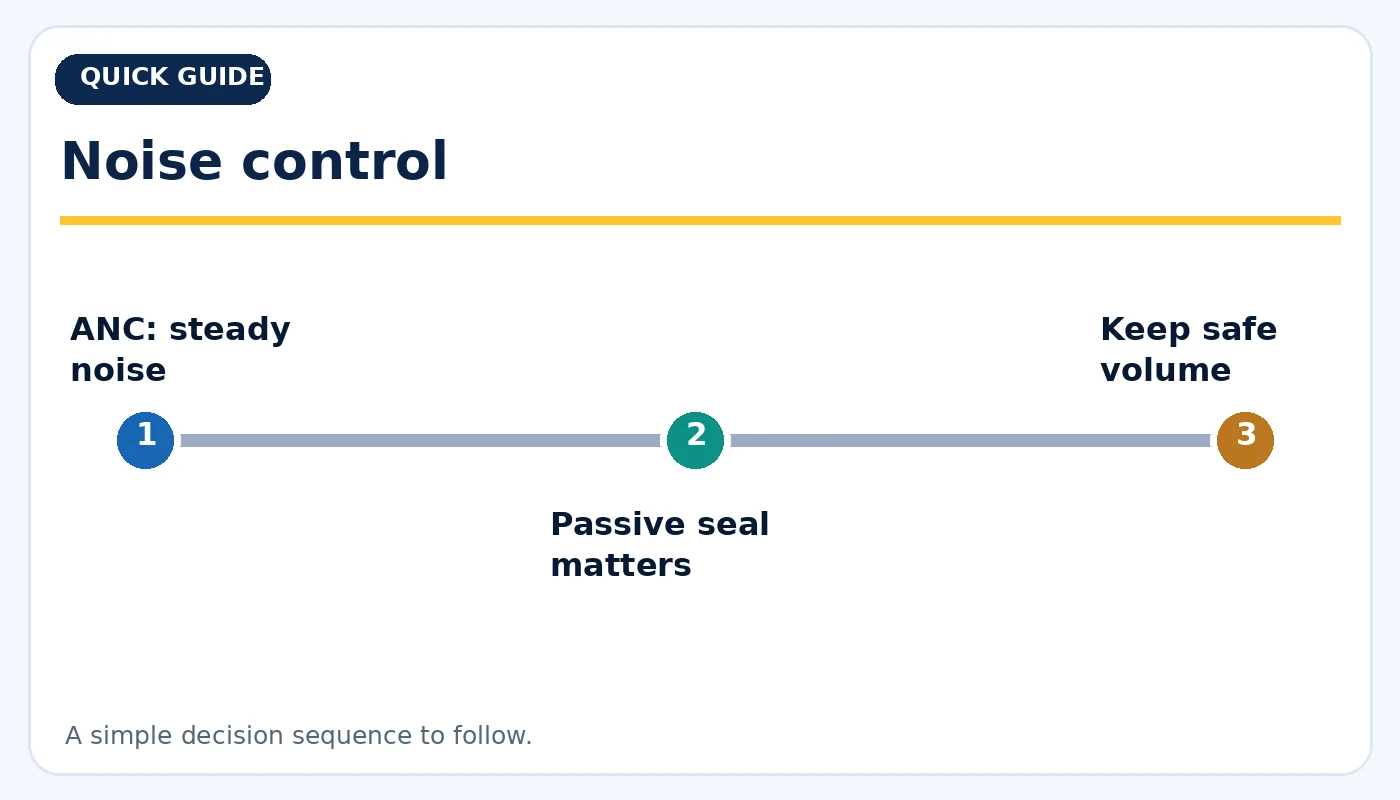
Noise control: practical considerations before buying.
Battery life and charging routines
Over-ear models usually have physically larger batteries, while true wireless earbuds rely on a portable charging case. Compare listening time with ANC actually turned on, not just the manufacturer's maximum under ideal conditions. Check whether wired listening works if the battery is empty; some models still need power for certain functions. For used earbuds, worn cell batteries can reduce both the buds' and case's runtime. Confirm that every earbud charges reliably in its compartment.
Bluetooth features worth checking
Multipoint connection, fast device switching, low-latency modes, spatial audio and companion-app controls differ by brand and device ecosystem. Some features require a particular phone or account. Don't pay extra for a feature you cannot use with your devices. If your desktop has unstable Bluetooth, an updated adapter may help more than buying another headset. For video meetings, confirm the audio-output and microphone settings in your meeting application rather than assuming the connection will configure itself.
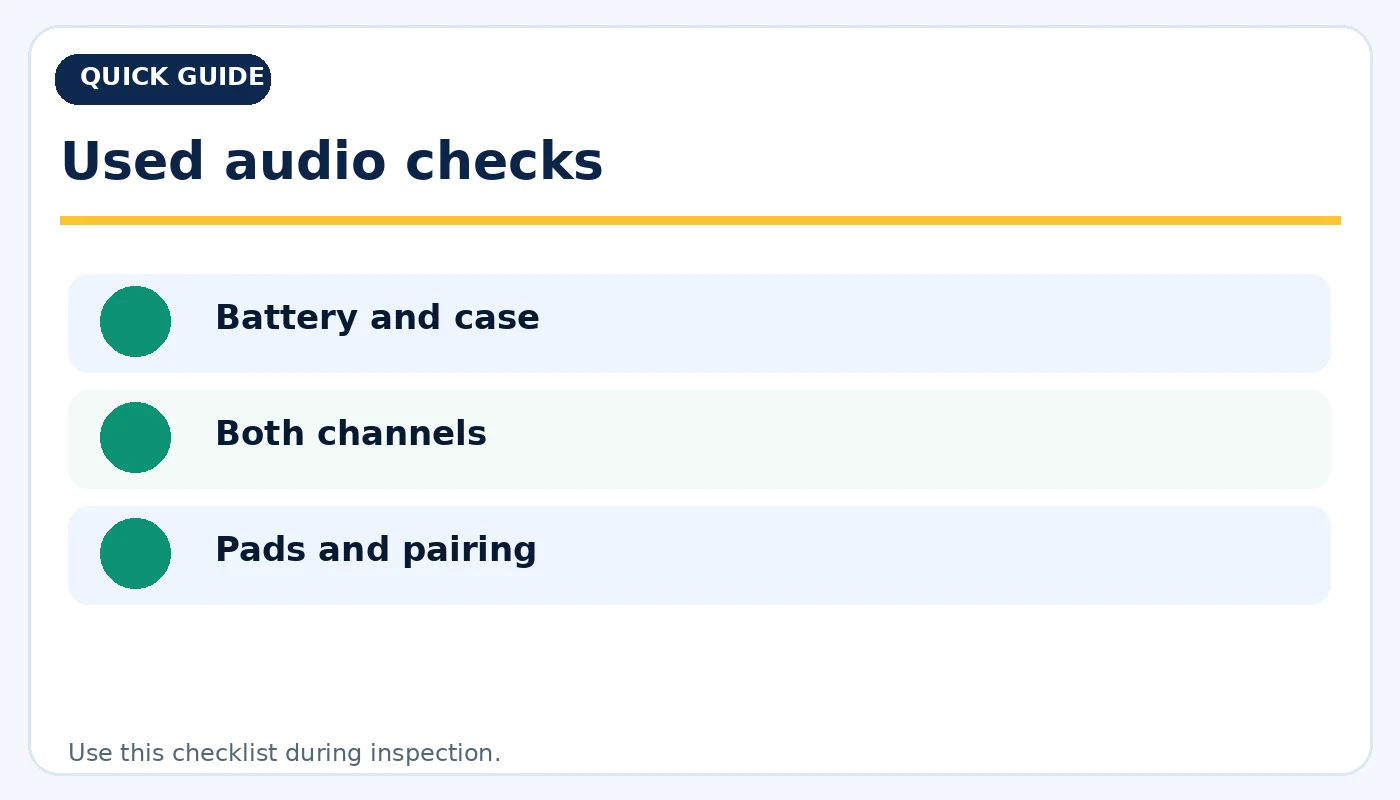
Used audio checks: practical considerations before buying.
What to inspect when buying used audio
Inspect the hinge, headband, ear pads, charging port, case contacts and any replaceable tips. Test the left and right channels separately at a moderate volume. Listen for rattling, crackling and imbalance, then check ANC and transparency. Verify pairing, battery behavior and whether the item is still tied to another person's account or device-finding service. Hygiene is important: replacement ear tips or cleaned pads may be worthwhile and should be reflected in your purchase budget.
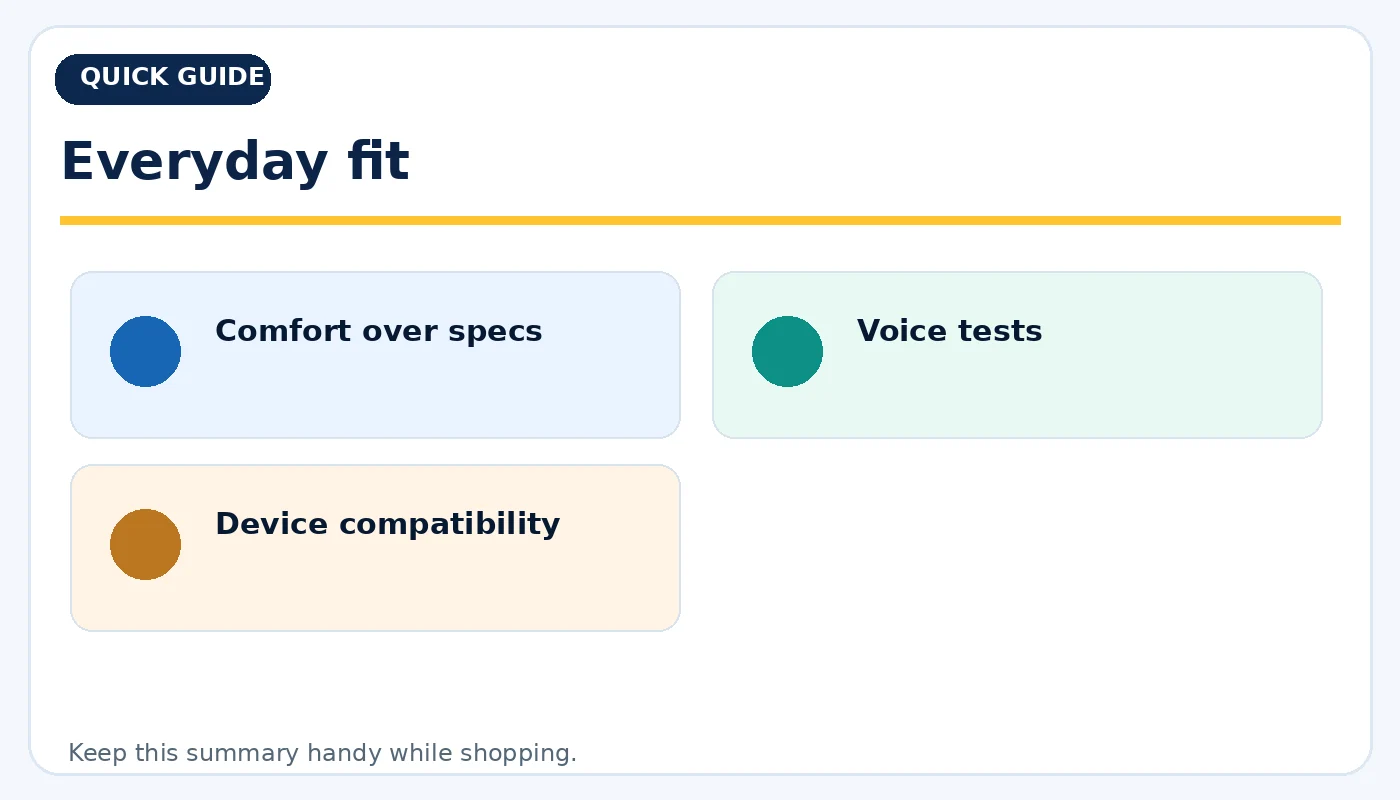
Everyday fit: practical considerations before buying.
Make the choice by your main activity
Choose over-ear ANC headphones if your priority is long stationary listening or travel and the fit is comfortable. Choose earbuds if compactness, workouts and quick daily use matter most. Consider a wired headset when predictable latency and a consistent microphone are the top priorities. The best deal is the model you can use comfortably and reliably, not necessarily the one with the longest feature list.
Quick buying checklist
- Over-ear: flights and desk
- Earbuds: commute and gym
- Wired: reliable calls
- ANC: steady noise
- Passive seal matters
- Keep safe volume
- Battery and case
- Both channels
- Pads and pairing
- Comfort over specs
- Voice tests
- Device compatibility
Frequently asked questions
Do noise-canceling earbuds work as well as headphones?
Some earbuds perform very well, but effectiveness depends on fit, noise type and the exact model.
Which is better for Zoom or Teams calls?
Choose based on an actual microphone test and connection stability; neither form factor wins automatically.
Are used wireless earbuds worth buying?
They can be, if hygiene, pairing, both batteries and charging contacts are checked carefully.
Explore related tech at TamDo.us
Ready to compare real listings? Shop headphones and portable audio or browse more News & Guides. Listings change frequently; check each item’s condition, included accessories and availability before ordering.